Best Time to Visit Ijen Crater: Insider Guide 2026
Planning a trek to the world’s most famous acidic lake shouldn’t feel like a high-stakes gamble. Many travelers fly halfway across the globe only to find the crater swallowed by thick fog or closed due to seasonal rains. This uncertainty can turn a dream adventure into a frustrating ordeal of missed connections and muddy trails.
But here’s the trick: timing your visit perfectly transforms a simple hike into an otherworldly experience. Luckily, our premium tour packages handle every logistical hurdle, ensuring you arrive when the conditions are most majestic. This guide provides the exact blueprint to navigating the seasonal shifts of East Java.
To be honest, the “best” moment depends entirely on whether you prioritize the rare blue flames or the golden sunrise. If you are serious about seeing the legendary electric-blue fire, you must understand how weather affects gas visibility. Our comprehensive Ijen Crater tour insights will help you choose the perfect window for your visit.
What You Need to Know
The absolute peak window for visiting Ijen Crater is between July and September. During these months, the dry season ensures clear skies and stable trekking paths. However, the shoulder months of May and October offer a fantastic balance of fewer crowds and pleasant weather for adventurous souls.
Table of Contents
Understanding the Seasons in East Java
Indonesia technically only has two seasons: dry and rainy. In the high altitudes of the Ijen Plateau, these seasons behave quite differently than on the coast. In fact, the temperature at the summit can drop to a shivering 5°C (41°F) even when the lowlands are sweltering.
Surprisingly, the dry season doesn’t just mean “no rain.” It also brings significantly higher winds which can shift the toxic sulfur clouds across the hiking trail. That being said, dry conditions are far safer for the steep descent into the caldera where the blue fire resides.
The Dry Season (April – October)
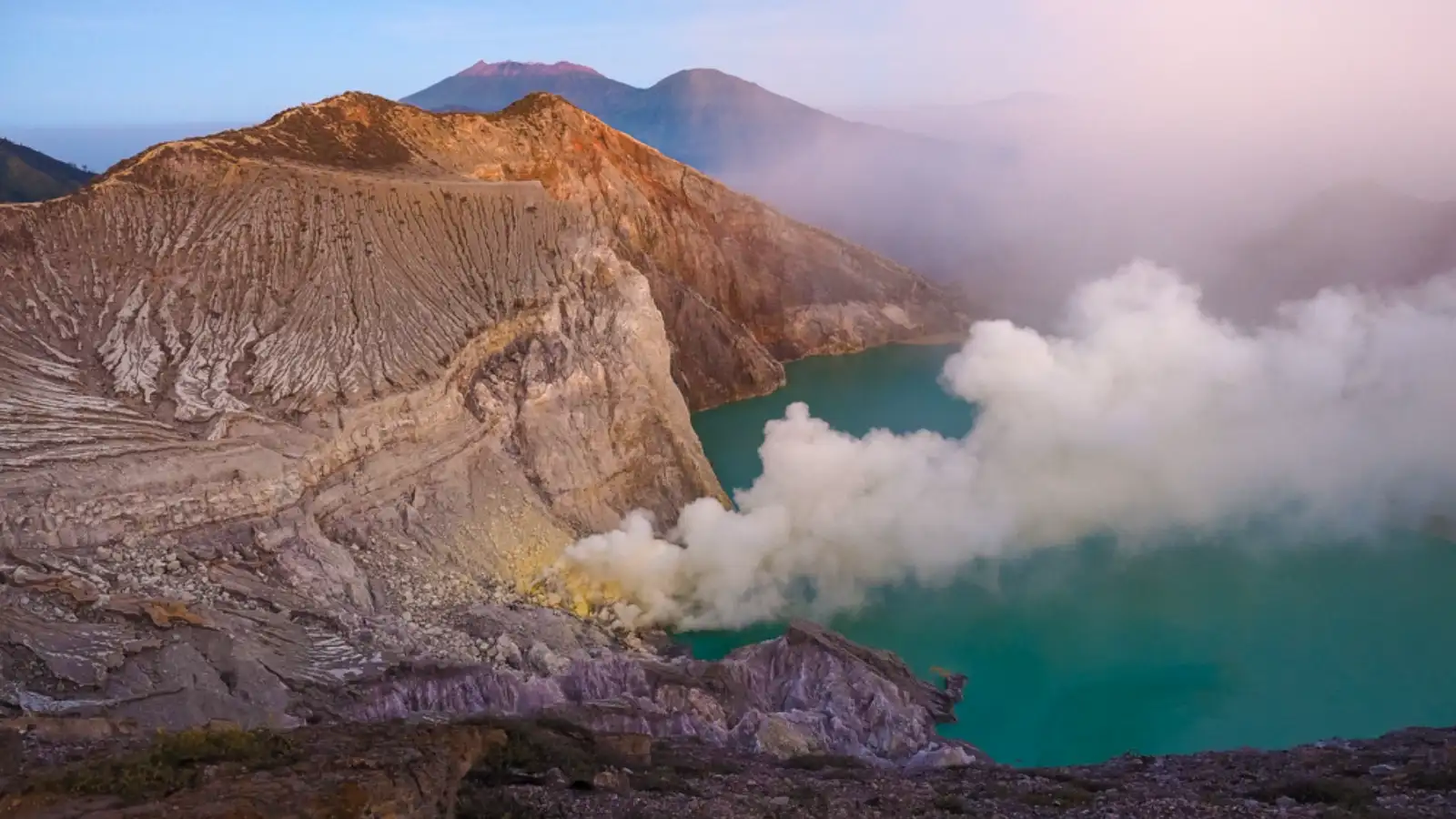
Ultimately, this is the gold standard for trekking in Indonesia. The paths are firm, and the risk of landslides is virtually zero. Plus, the sky remains a deep, piercing blue, providing the perfect backdrop for the turquoise lake below.
Keep in mind that August is the busiest month. As a result, you might find yourself sharing the narrow rim with hundreds of other eager photographers. We recommend booking a tour from Bali early to secure the best local guides who know the quietest spots.
The Rainy Season (November – March)
Truthfully, hiking during the rainy season is a mixed bag. For instance, the landscape becomes incredibly lush and vibrant green, which looks stunning in photos. But here’s the catch: heavy afternoon downpours can make the predawn hike slippery and dangerous for inexperienced trekkers.
Of course, there is one major advantage to this time of year. Crowds thin out significantly, giving you a much more private experience with the mountain. If you choose this window, always ensure your gear includes high-quality waterproof layers and sturdy boots with deep treads.
Important Update on Blue Fire Visibility
The appearance of the Blue Fire at Ijen Crater is highly unpredictable. It depends heavily on daily volcanic activity, gas density, and weather conditions. It is sometimes clearly visible, and sometimes not visible at all. To avoid disappointment, please contact us via WhatsApp to check the latest daily updates before you hike.
Timing for the Electric Blue Fire
Seeing the blue fire requires a very specific set of conditions. Since it is actually burning sulfuric gas, it only becomes visible to the human eye in total darkness. As a result, you must begin your hike from the Paltuding base camp around 2:00 AM.
Naturally, the clarity of the fire depends on the air’s humidity. High humidity can cause the sulfur smoke to become thick and opaque, hiding the flames. For this reason, the peak dry months of July and August provide the highest statistical probability of a clear sighting.
Why Darkness is Crucial
Even better, arriving at the crater floor before 4:00 AM allows you to witness the flames at their most intense. Once the first hint of pre-dawn light touches the sky, the blue glow begins to fade into the background. Truthfully, the contrast between the dark volcanic rock and the neon fire is a sight that photos cannot fully capture.
Luckily, our guides are experts at timing the descent. They monitor the wind direction to ensure you aren’t engulfed in the acrid smoke while trying to get that perfect shot. This level of safety is why most travelers prefer our combined Bromo-Ijen expeditions.
Month-by-Month Weather Analysis
Deciding which specific month to visit can be overwhelming. To help, we have broken down the typical conditions you can expect throughout the calendar. Keep in mind that global weather patterns are shifting, making these general trends rather than guarantees.
January and February
Usually, these are the wettest months. The trail can become quite muddy and slippery, which increases the physical toll on your legs. Plus, the crater is often shrouded in thick mist, potentially blocking the view of the lake.
That being said, the mist can create a haunting, ethereal atmosphere that some photographers adore. Just be prepared for the possibility that the local authorities might close the park for safety if the weather turns extreme.
March and April
During this period, the rain starts to taper off. The air is still fresh, and the dust hasn’t yet become a problem on the trail. For instance, this is a fantastic time for those who want to see the greenery of the surrounding mountains before they turn brown in the heat.
Luckily, the temperatures are slightly milder than in the dead of winter. It’s a great time to book our Mount Bromo tour alongside Ijen for a complete volcanic circuit.
Unlock the Ultimate East Java Experience
Don’t just read about it. Let our expert local guides handle the logistics while you enjoy a seamless, premium adventure.
May and June
Actually, many locals consider this the “sweet spot.” The dry season has officially arrived, but the peak summer crowds haven’t yet descended. For instance, you can enjoy clear morning views without the long queues at the trailhead.
Even better, the Milky Way is often visible from the crater rim during these months. If you are a night-sky enthusiast, this is the best time to visit Ijen Crater for astrophotography. To be honest, the sight of the stars reflecting off the sulfur clouds is beyond words.
How to Avoid the Tourist Swarms
But here’s the trick to avoiding the masses: avoid local holidays at all costs. Indonesian long weekends and school holidays see thousands of local tourists flocking to the mountain. During these times, the narrow path down to the blue fire can become a dangerous bottleneck.
In fact, Tuesdays and Wednesdays are statistically the quietest days to hike. If your schedule allows, plan your East Java itinerary to hit Ijen mid-week. Of course, our private East Java tour packages prioritize these quieter windows to maximize your comfort.
Avoiding the Paltuding Rush
Surprisingly, most group tours arrive at the same time between 1:00 AM and 2:30 AM. If you are a fast hiker, starting slightly earlier can put you ahead of the pack. Ultimately, reaching the rim 15 minutes before the main crowd makes a massive difference in your experience.
Alternatively, some travelers choose to skip the blue fire and start their hike at 4:30 AM. This allows you to walk in the first light of dawn, avoiding the chaos of the night hike. While you miss the blue flames, you get the sunrise and the lake views with half the crowd.
The Impact of Weekends
Saturday and Sunday are notoriously crowded. Local residents from nearby cities like Surabaya and Malang often visit for a quick weekend getaway. As a result, the parking lot can resemble a busy festival rather than a tranquil nature reserve.
Luckily, if you must visit on a weekend, our guides know several “secret” viewing spots away from the main rim. These spots offer the same stunning vistas but without the noise and selfie sticks. Plus, we provide premium gas masks that make waiting in any sulfur-heavy areas much more tolerable.
Golden Hour & Photography Windows
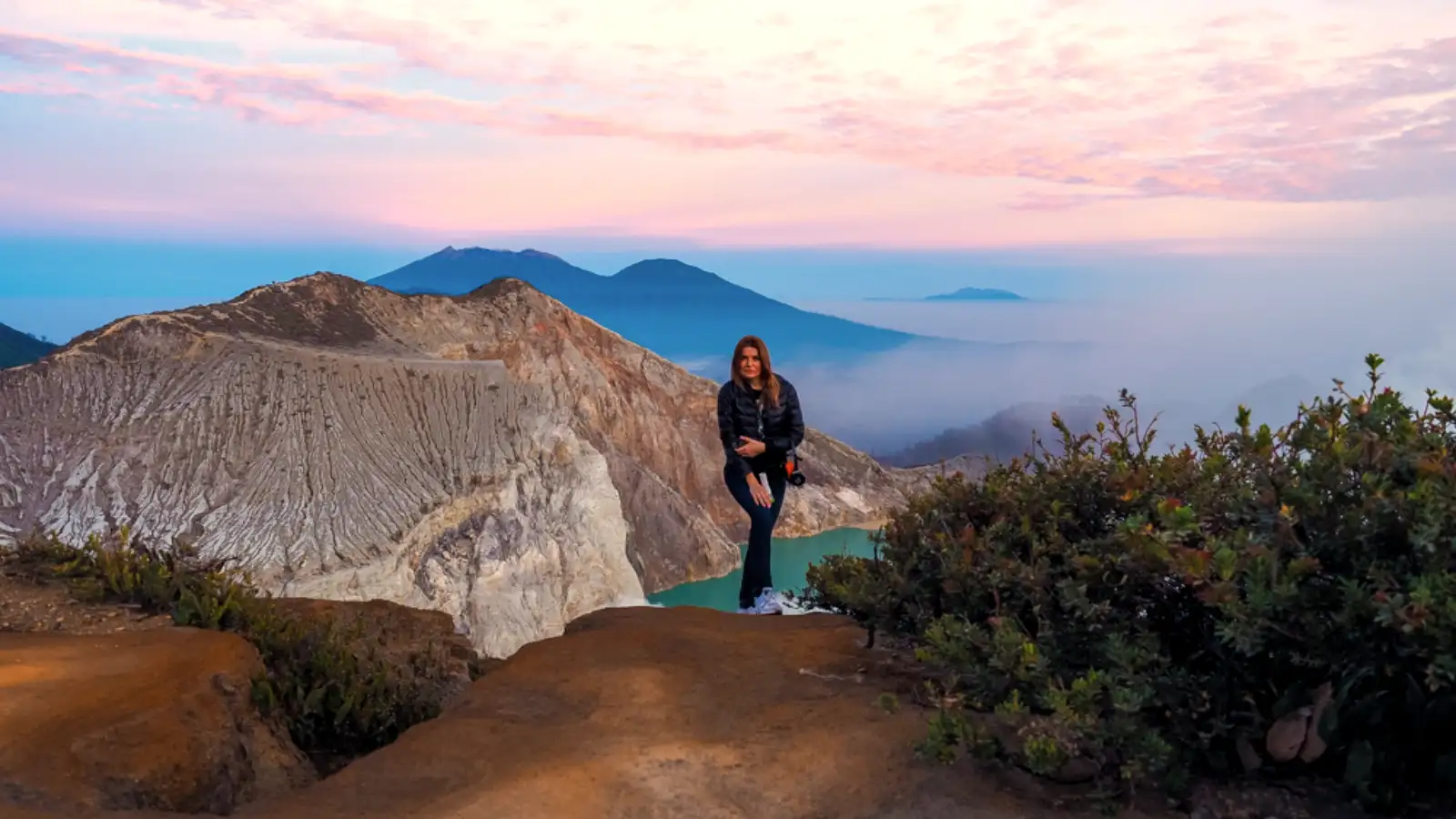
For photographers, timing is everything. The transition from the “Blue Hour” to the “Golden Hour” at Ijen is one of the most spectacular light shows on Earth. Around 5:15 AM, the sun begins to peek over the eastern horizon, illuminating the volcanic “Sea of Sand” in the distance.
Truthfully, the best light for the lake itself happens a bit later, around 7:00 AM. This is when the sun is high enough to hit the water, bringing out that intense, milky turquoise color. Before this, the lake often looks dark and moody in the shadows of the crater walls.
Capturing the Sulfur Miners
Don’t forget to photograph the legendary sulfur miners. These incredible men carry up to 90kg of sulfur on their shoulders up the steep crater walls. They usually begin their first trip at dawn, providing a powerful human element to your landscape shots.
But here’s a professional tip: always ask for permission before snapping a close-up. Luckily, most miners are friendly and will happily pose if you offer a small tip or a cigarette. Keep in mind that their work is incredibly grueling, so respect their space and path at all times.
Best Lenses for Ijen
For the wide vistas of the crater rim, a 16-35mm wide-angle lens is essential. It allows you to capture the vastness of the caldera and the curvature of the lake. However, a 70-200mm telephoto lens is surprisingly useful for isolating the textures of the smoking vents or the miners’ expressions.
Plus, a sturdy tripod is non-negotiable for the blue fire. Since the flames are dim, you will need long exposure times (around 5-15 seconds) to capture the detail. Just be careful with your gear; the acidic air is corrosive, so wipe down your camera and lenses with a damp cloth after the hike.
Seasonal Packing Essentials
Regardless of the month, the mountain demands respect. The combination of freezing temperatures, steep inclines, and toxic gases means your packing list can make or break your trip. For instance, many travelers underestimate the cold and end up shivering on the rim while waiting for sunrise.
To be honest, layering is the only way to survive the temperature fluctuations. You will sweat during the climb, but freeze the moment you stop moving at the top. We recommend a base layer of moisture-wicking fabric, a warm fleece middle layer, and a windproof outer shell.
Choosing the Right Gas Mask
Don’t settle for the cheap paper masks sold at the trailhead. They are useless against the high concentration of sulfur dioxide. To be honest, a professional respirator with N95 or P100 filters is the only way to descend into the crater safely.
Luckily, our one-day tours from Banyuwangi include premium gas mask rentals as standard. We ensure every guest has high-quality, sanitized equipment. This allows you to focus on the beauty of the blue fire rather than struggling to breathe.
Footwear and Safety
Even better, invest in a pair of shoes with good ankle support. The descent into the crater is essentially a scramble over loose volcanic rock. Surprisingly, many people try to do this in sneakers and end up with rolled ankles or ruined shoes.
Plus, carry a small first aid kit with basic bandages and antiseptic. While our guides are trained in first aid, having your own supplies for minor scrapes is always a smart move for an international traveler. Safety isn’t just about the mask; it’s about the entire preparation.
Why Trust This Local Expert Guide
We aren’t just another travel blog; we are a leading local operator based in East Java. For years, we have guided thousands of international travelers through the rugged terrain of Ijen and Bromo. This depth of experience allows us to provide real-time updates that generic sites simply cannot match.
According to our lead local guide, who has summited Ijen over 1,500 times:
“The mountain has its own personality. You can check the weather app a hundred times, but the only way to truly know the conditions is to be there every single morning. We talk to the miners, we monitor the gas flow, and we prioritize guest safety above all else.”
Our commitment to excellence is reflected in our premium multi-day expeditions. We believe that luxury isn’t just about high-end hotels; it’s about the peace of mind that comes with expert logistics and local knowledge. When you book with us, you are booking a worry-free experience.
A Commitment to Sustainable Tourism
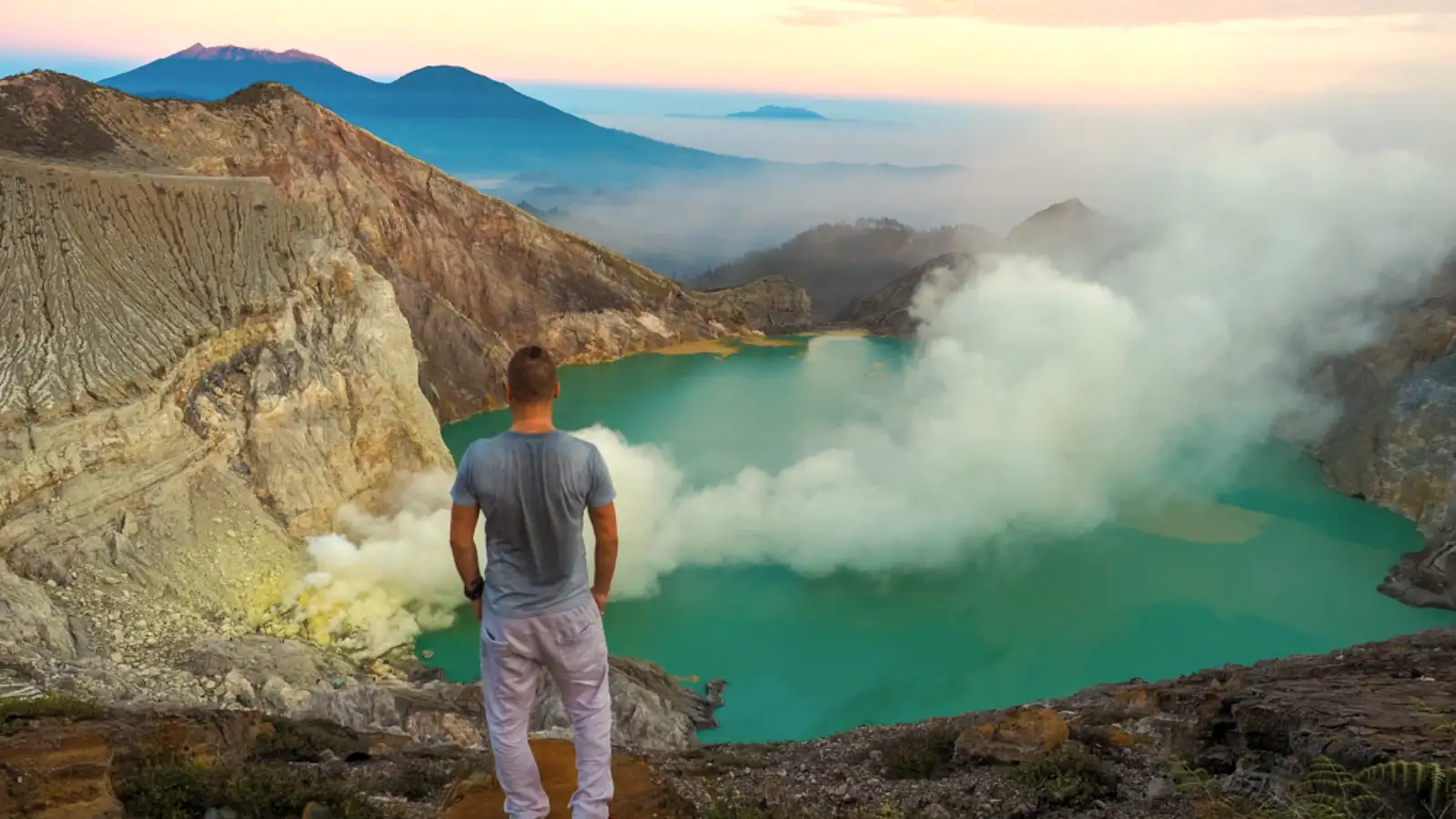
Furthermore, we work closely with the local community. By employing former sulfur miners as guides, we provide them with a safer and more sustainable income. This connection gives you a deeper insight into the culture and history of the region that you won’t find in any guidebook.
Plus, we strictly follow “Leave No Trace” principles. We educate our guests on how to enjoy the volcanic landscape without leaving a footprint. Our goal is to ensure that the “best time to visit Ijen Crater” remains a reality for generations of travelers to come.
Continue Your Adventure
- Complete Ijen Crater Hiking Guide
- 3-Day Bromo & Ijen Adventure from Bali
- Mount Bromo Sunrise Tour from Surabaya
- Ultimate East Java: Bromo, Ijen, & Tumpak Sewu
Ready for the Adventure of a Lifetime?
Join thousands of happy travelers who have trusted us to deliver safe, luxurious, and unforgettable volcano tours across East Java.
Frequently Asked Questions
The absolute best month is August. This is the height of the dry season, offering the clearest skies, highest visibility for the Blue Fire, and most stable trekking conditions, though it is also the busiest time.
Yes, you can see it if it is not currently raining and the gas density is high. However, the probability is lower due to frequent fog and thick clouds that can obscure the flames at the bottom of the crater.
Generally, yes, but the park closes on the first Friday of every month for a “nature conservation day.” Additionally, the park may close unexpectedly due to high volcanic activity or extreme weather conditions.
If you only want to see the sunrise, starting at 4:00 AM is sufficient. However, if you want to see the Blue Fire first, you must begin your hike no later than 2:00 AM to reach the crater floor in darkness.
Temperatures can drop between 5°C and 10°C (41°F – 50°F) before sunrise. The wind chill on the crater rim can make it feel even colder, so high-quality thermal layers are absolutely essential for a comfortable visit.
Conclusion: Your Perfect Ijen Timing
Ultimately, the best time to visit Ijen Crater is the moment you decide to prioritize your sense of adventure over your fear of the unknown. Whether you choose the crystal-clear skies of August or the moody, lush landscapes of March, the mountain will reward you with its raw, prehistoric beauty.
Luckily, you don’t have to navigate this alone. By choosing a reputable local guide and preparing for the specific seasonal challenges, you ensure that your trip to East Java is nothing short of legendary. To be honest, the view from the rim as the sun breaks over the horizon is a memory that will stay with you forever.